
CR 100 North and CR 200 West Roundabout Project
Cultural Resources
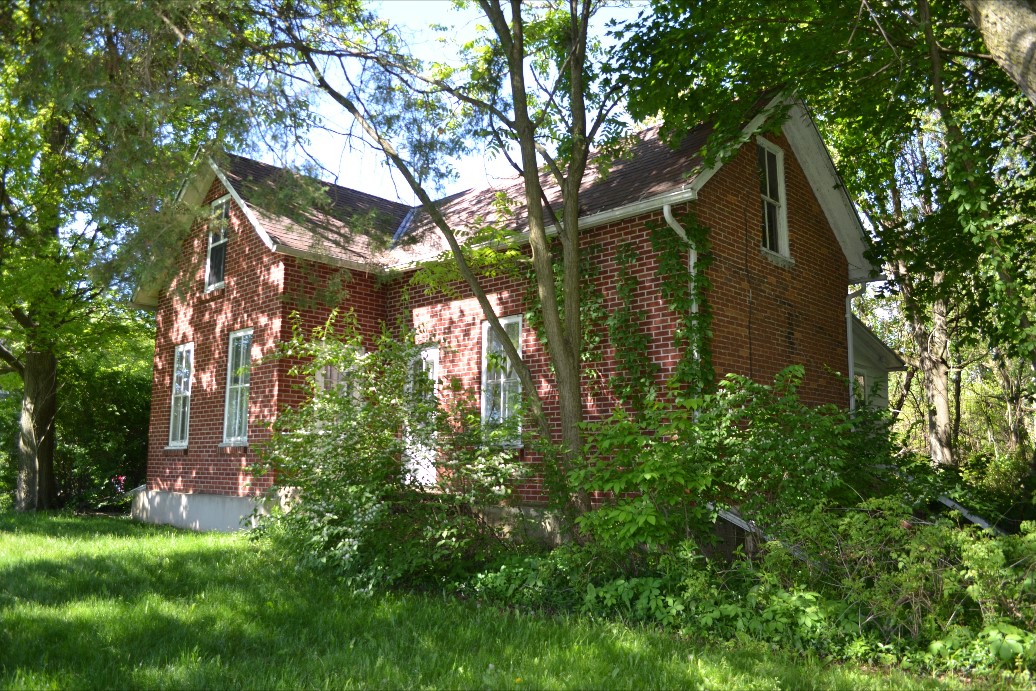
Metric provided Section 106 services for this complex transportation project on behalf of the Indiana Department of Transportation (INDOT), which involved relocation of a c.1881 house and three outbuildings for construction of a new roundabout at the intersection of CR 100 North and CR 200 West in Steuben County, Indiana.
The property was noted to have been rated Contributing within the 2008 Steuben County Historic Sites and Structures Inventory Report (IHSSI No. 151-018-25124), as part of its ongoing county architectural survey program administered by the Indiana Division of Historic Preservation and Archaeology (SHPO). A Contributing rating signifies the property met the IHSSI’s 40-year age requirement, and that it retains enough significance to contribute to the historic fabric of a community, but not enough significance to be considered above-average or individually National Register of Historic Places (NRHP) eligible.
During fieldwork, Metric architectural historians noted integrity issues with the subject property, and an overview of the area’s history did not find any mention of this property as significant to its past. Thus, the property’s Contributing rating remained appropriate. The Indiana SHPO issued a comment letter agreeing with this recommendation; however, in response to a consulting parties’ disagreement with its NRHP eligibility, the SHPO reversed their earlier opinion and stated the property is NRHP eligible under Criterion A for its agricultural significance, and under Criterion C as a vernacular rural house made of brick, which their office considers a rare and unique type in the area. As a result, the INDOT Cultural Resources Office retained Metric to draft a report that presented previous and new research regarding the property in question to ascertain its level of historical significance.
Metric staff conducted research on the subject property using U.S. Census records, the county assessor’s office land appraisal and property tax records, the county recorder’s office title and deed instruments, contemporary newspaper accounts, and historic maps and photographs. This research was used to prepare a detailed determination of eligibility report of the subject property for submittal to the National Park Service’s Keeper of the National Register (Keeper) for their final comment.
After completion of the review, the Keeper agreed with Metric’s conclusion that the subject property was not NRHP eligible, stating the research does not support the SHPO’s argument that the property reflected agricultural and architectural significance.